Bill C-39, Building Canada Strong Act
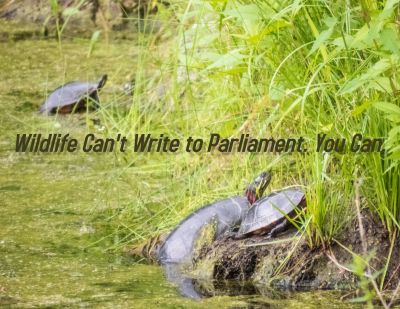
Wildlife Can't Write to Parliament. You Can.
When Environmental Protections Change, What Happens to Wildlife?
Reading environmental legislation probably isn't anyone's favorite pastime. But proposed changes in Ottawa deserve our attention, especially when they could affect the wildlife, wetlands, forests, lakes, and rivers we care about.
On September 21, 2026, the federal government introduced Bill C-39, the Building Canada Strong Act. It proposes changes to the Impact Assessment Act, Species at Risk Act, Fisheries Act, and Canadian Navigable Waters Act to speed up approvals for major projects. The government says it will maintain environmental standards, while conservation organizations worry the changes could mean less independent oversight and weaker protections for wildlife and habitat.
Bill C-39 Moves to Committee Review
On October 8, the House of Commons passed Bill C-39 at second reading and sent it to committee, with its first meeting scheduled for October 19. Committee members can hear from experts and the public, examine concerns, and recommend changes before the bill returns to the House.
Hastings-Lennox and Addington-Tyendinaga MP Shelby Kramp-Neuman addressed Bill C-39 in her October newsletter, explaining that sending the bill to committee does not mean she supports it as written. She emphasized the importance of hearing from conservation groups, environmental experts, Indigenous communities, businesses, community organizations, and citizens before deciding what changes may be needed.
The bill is not yet law, so you still have an opportunity to raise concerns and ask questions.
Why This Matters to Wildlife
Wildlife doesn't recognize property lines or municipal boundaries. Turtles travel between wetlands, nesting areas, and overwintering sites. Frogs depend on ponds and nearby forests. Fish need healthy waterways, and countless other animals rely on connected habitats for food, shelter, and breeding.
Clearing forests, filling wetlands, or changing waterways can destroy habitat and leave animals with nowhere safe to go. Protecting one wetland does little good if a turtle's nesting area across the road disappears. Unfortunately, turtles can't simply pack up and move somewhere else.
Wetlands also help filter water and reduce flooding. Damage in one part of a watershed can affect wildlife and communities kilometers away.
Then there are cumulative impacts, a complicated term for something quite simple. One new road, cleared property, filled wetland, or altered shoreline may seem minor, but add enough of them together and the damage can be considerable. Looking at each project separately doesn't always reveal the bigger problem.
Who Is Looking Out for Wildlife?
Federal and provincial governments share responsibility for environmental protection, but their laws don't always cover the same things. If provincial protections are reduced, federal laws don't automatically fill the gaps.
Ontario's Bill 5, passed in June 2025, made major changes to provincial environmental legislation, including replacing the Endangered Species Act with the Species Conservation Act, 2025, which came into force in March 2026.
Now that the federal government is proposing changes, it's reasonable to ask whether wildlife and important habitats could end up with less protection. How will changes to environmental assessments, species-at-risk permits, fish habitat rules, and navigable waters approvals work alongside Ontario's laws?
Canada needs housing, infrastructure, jobs, and economic growth. Nobody is suggesting otherwise. But faster approvals shouldn't mean overlooking environmental damage that may be difficult or impossible to repair.
Why Writing to Your MP Matters
Your Member of Parliament (MP) represents your community in Ottawa, but how can they know what concerns you if you don't tell them?
Think Turtle Conservation Initiative encourages anyone concerned about Bill C-39 to contact their MP. Ask how the proposed changes could affect species at risk, wetlands, forests, waterways, fish habitat, and wildlife corridors. Will independent scientific reviews remain effective? Will the combined effects of development be considered? Will Indigenous and public input still have a meaningful role?
If you believe stronger safeguards are needed, say so. Ask your MP what amendments they would support to protect wildlife and habitat before voting on the bill.
You don't need to be an expert or write a lengthy letter. A few thoughtful sentences explaining your concerns and what you'd like your MP to consider can make a difference.
To make it easier, we've included two ready-to-use email samples at the end of this article. You can copy either one, send it as written, or personalize it to reflect your own concerns. The first is brief and to the point, while the second provides a little more detail about the potential consequences for wildlife and the environment.
You can find your MP and their email address through the Parliament of Canada website at www.ourcommons.ca/Members.
Additional information about Bill C-39 and environmental legislation is available through Ecojustice, West Coast Environmental Law, and Wildlife Conservation Society Canada.
Protecting Wildlife Protects Us, Too
Wetlands help clean water and reduce flooding. Forests store carbon and help regulate the climate. Healthy lakes, rivers, and streams support wildlife, recreation, and communities. Nature does an awful lot for us, and it doesn't send a bill for its services.
We can build homes, improve infrastructure, and create jobs while still protecting the natural areas that make our communities healthy places to live. The question is whether the proposed changes will provide enough protection while allowing development to move forward.
Once a wetland is gone or a waterway is damaged, restoring it isn't as simple as changing a law. That's why decisions about Bill C-39 matter, not just for wildlife, but for all of us. We all depend on clean water, flood protection, healthy ecosystems, and the many other services nature provides, whether we realize it or not.
Wildlife can't write to Parliament, but we can. One short email may not seem like much, but when enough people speak up, it becomes harder to overlook wildlife and the places they depend on. And protecting those places benefits us all.
Ready-to-Use Emails to Your Member of Parliament
Concerned about Bill C-39 but not sure what to say? The following two email samples are available for anyone who would like to contact their MP about protecting wildlife and the environment. Choose the one that best reflects your concerns, copy it into an email, and add your name and community. You're welcome to personalize the wording or include examples of wildlife and habitats that matter to you.
~~~~~~~~~~~~~~~~~~~~~~~~~~~~~~~~~~
Sample #1: A Short Email
Subject: Concerns About Bill C-39 and Environmental Protections
Dear [MP's Name],
I am writing as a concerned citizen regarding Bill C-39, the Building Canada Strong Act, and its potential impact on wildlife, species at risk, wetlands, forests, lakes, rivers, and other important natural habitats.
While I recognize the need for housing, infrastructure, and economic development, faster project approvals should not come at the expense of environmental protection.
I am concerned that the proposed changes could weaken environmental oversight, reduce opportunities for meaningful public consultation, and place additional pressure on wildlife habitats and aquatic ecosystems.
As Bill C-39 undergoes committee review, I respectfully ask that you carefully examine these concerns and withhold support for the legislation in its current form unless meaningful safeguards are secured for wildlife, biodiversity, waterways, and environmental accountability.
Once important habitats are destroyed, or species disappear from an area, the damage may be difficult or impossible to reverse.
I would appreciate knowing what steps you intend to take to ensure environmental protections are not compromised.
Thank you for your time and consideration.
Sincerely,
[Your Name]
[Community or Riding]
~~~~~~~~~~~~~~~~~~~~~~~~~~~~~~~~~~
Sample #2: A More Detailed Email
Subject: Bill C-39: Protecting Wildlife, Habitats and Environmental Accountability
Dear [MP's Name],
I am writing to express my concerns about Bill C-39, the Building Canada Strong Act, and the potential consequences of its proposed changes to federal environmental legislation.
I understand the importance of improving infrastructure, creating jobs, supporting economic development, and making government approval processes more efficient. However, I believe we can achieve these goals without compromising the environmental protections that wildlife, ecosystems, and communities depend on.
Of particular concern are the proposed changes affecting environmental assessments, species-at-risk protections, fish habitat, and waterways. Shortening approval timelines and coordinating regulatory decisions may improve efficiency, but these changes must not reduce the thoroughness, independence, or scientific integrity of environmental reviews.
Wildlife depends on healthy, connected habitats. Turtles, amphibians, birds, fish, mammals, and countless other species rely on wetlands, forests, rivers, and natural corridors for survival. When development fragments or destroys these habitats, the consequences can extend well beyond an individual project's boundaries.
I am also concerned about cumulative environmental impacts. A single development may appear to have limited consequences. Still, the combined effects of multiple roads, construction projects, wetland alterations, and habitat losses can seriously affect biodiversity and the health of entire watersheds.
With Ontario having already made significant changes to its provincial environmental legislation through Bill 5, it is especially important to ensure that federal protections remain effective and that wildlife and sensitive habitats do not fall through regulatory gaps.
As Bill C-39 undergoes committee review, I respectfully ask that you advocate for meaningful safeguards, including independent scientific oversight, thorough consideration of cumulative environmental impacts, strong protections for species at risk and aquatic habitats, transparent decision-making, and meaningful opportunities for Indigenous communities and the public to participate.
I also ask that you withhold support for Bill C-39 in its current form unless amendments adequately address these concerns and ensure that environmental protections are not weakened in the interest of faster approvals.
Economic development and environmental protection should not compete. Healthy ecosystems provide clean water, flood protection, climate resilience, and essential habitat for wildlife. These benefits are important to our communities today and to future generations.
Once a wetland is filled, a forest is cleared, or a species disappears from an area, reversing the damage may be extremely difficult or impossible. Decisions made now could have lasting consequences.
I would appreciate a response outlining your position on Bill C-39 and what measures you intend to support to ensure that Canada's environmental laws continue to provide meaningful protection for wildlife and the natural environment.
Thank you for considering these concerns and for representing your constituents.
Sincerely,
[Your Name]
[Community or Riding]
~~~~~~~~~~~~~~~~~~~~~~~~~~~~~~~~~~
Every Voice Matters
Whether you send a few sentences or a more detailed email, contacting your MP helps ensure wildlife and environmental protection remain part of the discussion. You don't have to agree with every concern raised here to ask questions, request clarification, or encourage careful consideration of the proposed changes.
Wildlife has no voice in Parliament. Each of us can speak up for the places animals depend on.
To contact the author, email thinkturtle@yahoo.com or phone Think Turtle Conservation Initiative at 647-606-9537.
The Alto High Speed Rail Line: Considering The Environmental Footprint

STOP BILL 5
Bill 5 – A Step Backward for Endangered Species
The newly proposed Protect Ontario by Unleashing Our Economy Act, 2025 (Bill 5) introduces sweeping changes that could seriously undermine protections for species at risk, wildlife habitat, and Ontario's broader environmental integrity.
Among the changes are amendments to the Endangered Species Act that would make it optional—not mandatory—to list species at risk. The bill also redefines what qualifies as "habitat," which could limit the areas protected for vulnerable species and lead to more habitat loss. Requirements for recovery plans are being repealed, and faster approvals for industrial development could open the door to more pollution, emissions, and destruction of sensitive ecosystems like wetlands and forests.
Although the government claims it will invest more in species conservation, past reviews raise serious concerns about how effectively this funding will be used.
If you are not aware of Bill 5, we have attached the links for a Press Release, Webinar, and Bill 5 in its entirety. These are followed by call-to-action links to sign a petition, make a call, and/or comment on the ERO.
Press Release, Webinar, and a detailed review of Bill 5.
Read the Environmental press release:
Watch Environmental Defence's Webinar: Stop the Bill 5 Power Grab!
https://www.youtube.com/watch?v=6Lj7ZqlPIGM
For a detailed review of Bill 5, please visit the Legislative Assembly of Ontario's website: https://www.ola.org/en/legislative-business/bills/parliament-44/session-1/bill-5
Call To Action
Sign Environmental Defences Stop Bill 5 take action petition:
https://act.environmentaldefence.ca/page/170384/action/1?ea.url.id=8088375
Sign Ontario Nature's Stop Bill 5 and the attacks on endangered species call to action: https://ontarionature.good.do/bill-5-stop-attacks-on-endangered-species/Email/
Make a phone call! Join Ontario Nature in calling on the Government of Ontario to stop Bill 5 and the attacks on endangered species. Call Doug Ford, Premier of Ontario, at 416-325-1941.
https://ontarionature.good.do/bill-5-stop-attacks-on-endangered-species/call/
Contact your Member of Provincial Parliament:
Contact your local MPP and let them know you expect them to represent the public interest, not just developers or corporate lobbyists.
Share this message with your networks. Talk to your neighbors, your colleagues, and your community. Many people still don't know this is happening. Let's change that.
Conclusion
Bill 5's provisions pose significant threats to Ontario's environmental integrity. The weakening of species protections, the potential for increased habitat destruction, and the facilitation of industrial development without adequate safeguards could have long-lasting negative impacts on biodiversity and climate resilience.
If passed, Bill 5 is not just another policy—it is a deliberate step backward in our collective fight to protect Ontario's natural heritage. Once the wild is paved over, it's lost forever. Let's defend what cannot defend itself before it's too late. Speak for the wild.
Photo Credit: Brtthome
